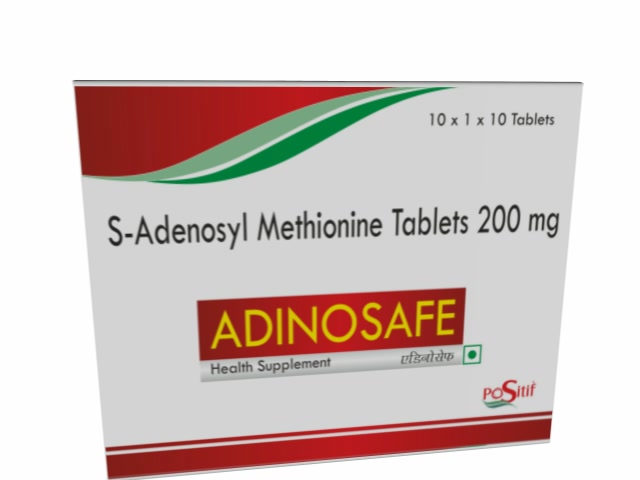
S-Adenosyl L-Methionine Tablet
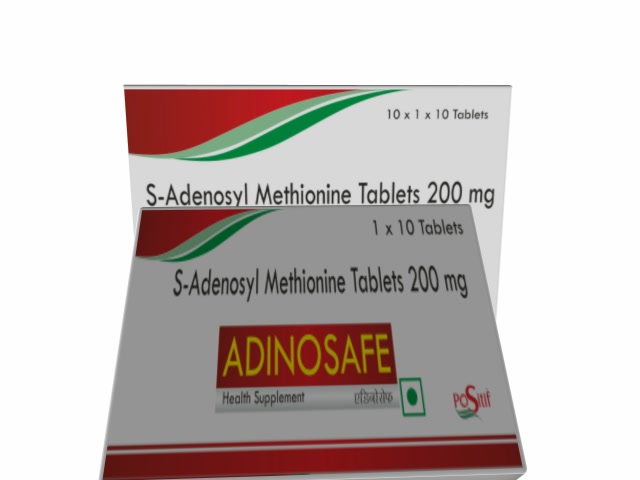
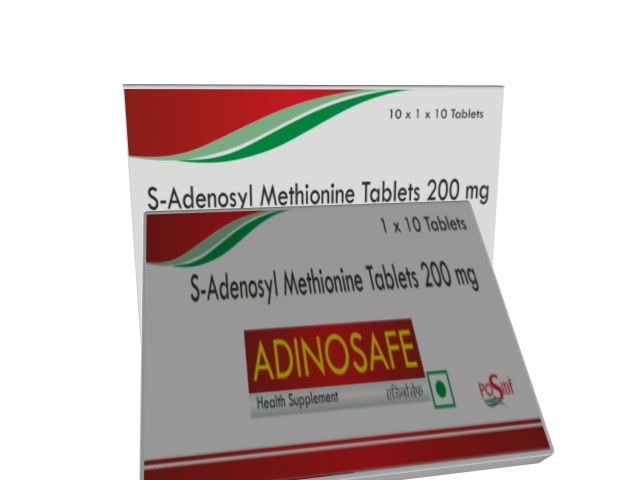
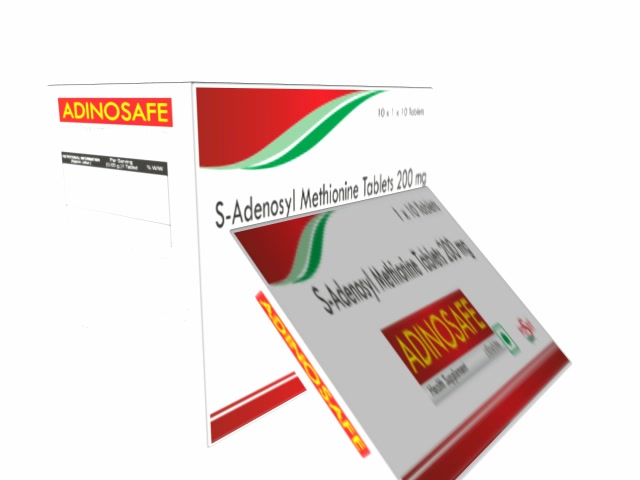
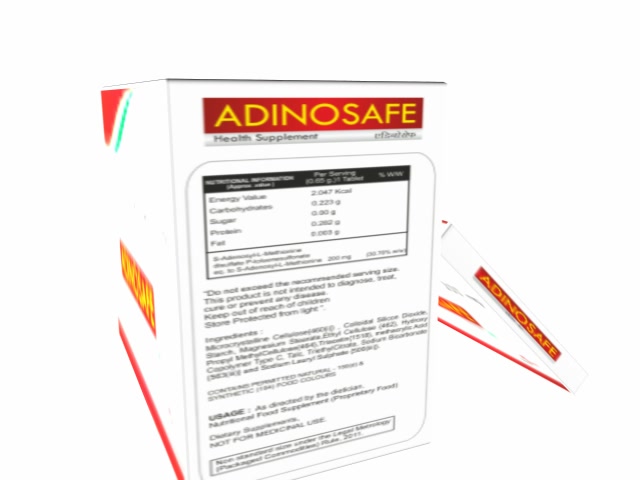
About Composition
S-Adenosyl-L-methionine (SAMe) or ademethionine is a natural occurring molecule that is formed in the body from methionine, an essential amino acid.Up to half of the daily intake of methionine is metabolized into S-Adenosyl-l-methionine in the liver. SAMe plays an important role as a methyl donor in more than 100 methyltransferase reactions.
Product Details
S-Adenosyl-L-methionine (SAMe) or ademethionine is a natural occurring molecule that is formed in the body from methionine, an essential amino acid.Up to half of the daily intake of methionine is metabolized into S-Adenosyl-l-methionine in the liver. SAMe plays an important role as a methyl donor in more than 100 methyltransferase reactions.
S-Adenosyl-l-methionine Disulfate p- toluenesulfonate is the stable form of the methionine.
Health Benefits
Treatment of Liver Disorder:
S-Adenosyl-l-methionine is a physiological precursor of thiols and sulfurated compounds, which are known to be decreased in patients with liver disease. SAMe therapy exerts an important role in reversing hepatic glutathione depletion in patients with liver disease.S-Adenosyl-l-methionine exerts many key functions in the liver, including serving as precursor for cysteine, one of the amino acids of glutathione; the major physiologic defense mechanism against oxidative stress.
Treatment of Depression:
S-Adenosyl-L-methionine is major methyl donor in the brain that is involved in the pathways for synthesis of hormones, neurotransmitters, nucleic acid, protein & phospholipids.According to biogenic amine hypothesis, depression is caused by the deficiency of monoamines, particularly norepinephrine and serotonin. SAMe is required for the synthesis of norepinephrine, dopamine & serotonin.
Treatment of Osteoarthritis:
SAMe exerts analgesic activity and stimulates the synthesis of proteoglycans by articular chondrocytes with minimal or absent side effects on the gastrointestinal tract and other organs.
The intensity of the activity of SAMe against osteoarthritis is similar to that exerted by non steroidal anti-inflammatory drugs, but its tolerability is higher.
Mechanism of Action
S-Adenosyl-L-Methionine occupies a central position in the metabolism of all cells as a precursor molecule in 3 major types of reacitons: methylation, transsulfuration, and aminopropylation.
Methylation:
S-Adenosyl-L-Methionine serves an important biological function as the sole methyo donor in a multitude of cellular methylation ereactions such as synthesis of protieins, proteoglycans, DNA and neurotransmitters (serotonin, dopamine, noradrenaline and acetylcholine). In human articular cartilage, through methylation it increases chondrocyte proteoglycan syntheisi s and proliferation rate.
Methylation also plays an improtant role in maintating the integrity of cellular membranes.
Phospholipid methylation is reaction in which phosphatidylethanol-amine is converted to phosphatidylcholine; this reaction involves the addition of 3 methyl groups to the amino moiety of a phosphatidylethanolamine molecule via S-Adenosyl-L-Methionin, the methyl donor. An increase in phospholipid methylation and the decrease in membrane viscosity create a more fluid
environment, which facilitates the lateral movement of proteins, such as receptors within the lipid bilayer.
Transsulfurations:
S-Adenosyl-L-Methionine is the product ofr all S-Adenosyl-L-Methionine dependent methylation reactios. S-Adenosylhomocysteine is metabolized rapidly to homlcysteine, which his converted to cystahionine in a reaction that requires pyridoxal phosphate (Vitamin B6) as a cofactor. This is the first step of the transsulfuration pathway, which finally leads to the synthesis
of glutathione, a major cellular antioxidant. Alternatively, homocysteine may function as the methyl acceptor for the betaine-homocysteine methyltransferase and methionine synthetase is accelerated.
Aminopropylation:
S-Adenosyl-L-Methionine plays another iportant metabolic role in the synthesis of polyamines, by way of a pathway known as aminopropylation. In this pathway, S-Adenosyl-L-Methionine is metabolized to decarboxylated S-Adenosyl-L-Methionine and the aminopropyl groups are transferred to putrescine and the polyamines spermidine and spermine are formed. The
polyamines spermidine and spermine are involved in the control of cell growth and also possess analgesic and anti-inflammatory properties.
Pharmacological Properties
Pharmacodynamics:
SAMe is naturally occurring molecule in the body. It functions as methyl donor in more than 100 methyltransferase reactions. Also involve in synthesis of the polyamine that involved in regulation of cell growth. SAMe is major methyl donor in the brain that is involved in the pathways for synthesis of hormones, neurotransmitters, nucleic acid, protein & phospholipids. SAMe is required for the synthesis of norepinephrine, dopamine & serotonin.
Pharmacokinetics:
After oral intake, SAMe is absorbed from the small intestine. It is better absorbed if taken empty stomach. Systemic bioavailability of SAME after oral administration is low. It is metabolized in liver. It crosses blood brain barrier and slowly accumulate in cerebrospinal fluid.
Drug Interaction
SAMe may be interacts with:
Serotonin Syndrome: Risk of serotonin syndrome can be there if SAMe is taken concomitantly with any of the following drugs: dextromethorphan (present in some cough formulations), pethidine, pentazocine, and tramadol.
Antidepressant Medications:SAMe may interact with antidepressant medications, increasing the potential for side effects including headache, irregular or acceterated heart rate, anxiety, and restlessness. Caution and medial supervision is advised for concomitant use.
Levodopa: SAMe may reduce its side effects and also its effectiveness over a period of time.
Medications for Diabetes:SAMe may reduce levels of blood sugar and may strengthen the effect of diabetes medications, which increases the possibility of hypoglycaemia.
Warning and Precautions
Consult your healthcare provider prior to use if you are pregnant, nursing, taking any medication or have any medical conditions.
KEEP OUT OF REACH OF CHILDREN.
Side Effects
● Changes in emotions or mood
● Unusual or uncontrolled movements of face, arms, mouth or legs
● Restlessness
● Tremors
● Muscle fatigue